
The Politics of Apna Dal: Navigating the Landscape of Single-Caste Parties in Uttar Pradesh, India
- Keywords:
- Apna Dal, Identity Politics, Caste-Based Parties, Electoral Alliances, Social Justice, Coalition Theory, Uttar Pradesh
- Abstract
-
This study examines the political ascent of Apna Dal in Uttar Pradesh, focusing on the core research gap: how single-caste parties sustain influence beyond identity mobilization through strategic alliances and organizational tactics. While existing scholarship highlights the role of caste-based mobilization, there is a notable research gap in understanding the strategic alliances and organizational processes that enable such parties to sustain influence amid political fragmentation. Guiding this analysis is a theoretical framework rooted in identity politics and coalition theory, emphasizing the interplay between social recognition and political pragmatism. The core argument positions Apna Dal’s success as a "contingent success" model, where pragmatic coalition-building with larger entities and territorial concentration of its Kurmi vote base strategically overcome the limitations of a narrow social base. Key findings demonstrate that the party’s durable influence hinges on strategic coalitional opportunism rather than deep institutionalization, making its power disproportionate to its size. However, this leader-centric approach results in organizational fragility, evidenced by succession crises. The study concludes that Apna Dal exemplifies how caste-centric parties leverage strategic adaptability to secure political leverage and policy influence.
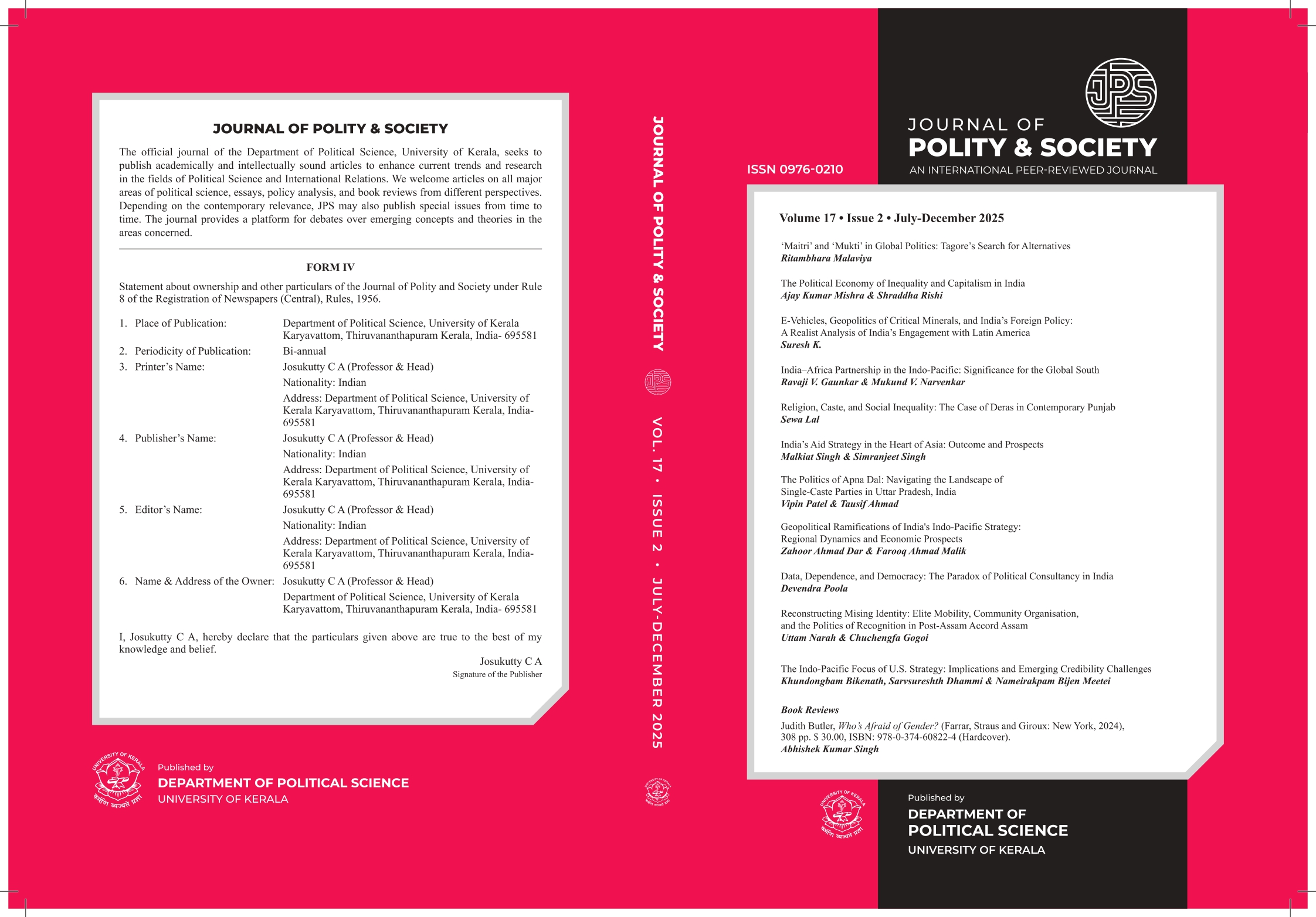
- Cover Image
-
- Downloads
- Published
- 07-02-2026
- Section
- Articles
- License
-
Copyright (c) 2026 Journal of Polity and Society

This work is licensed under a Creative Commons Attribution-NonCommercial 4.0 International License.
